


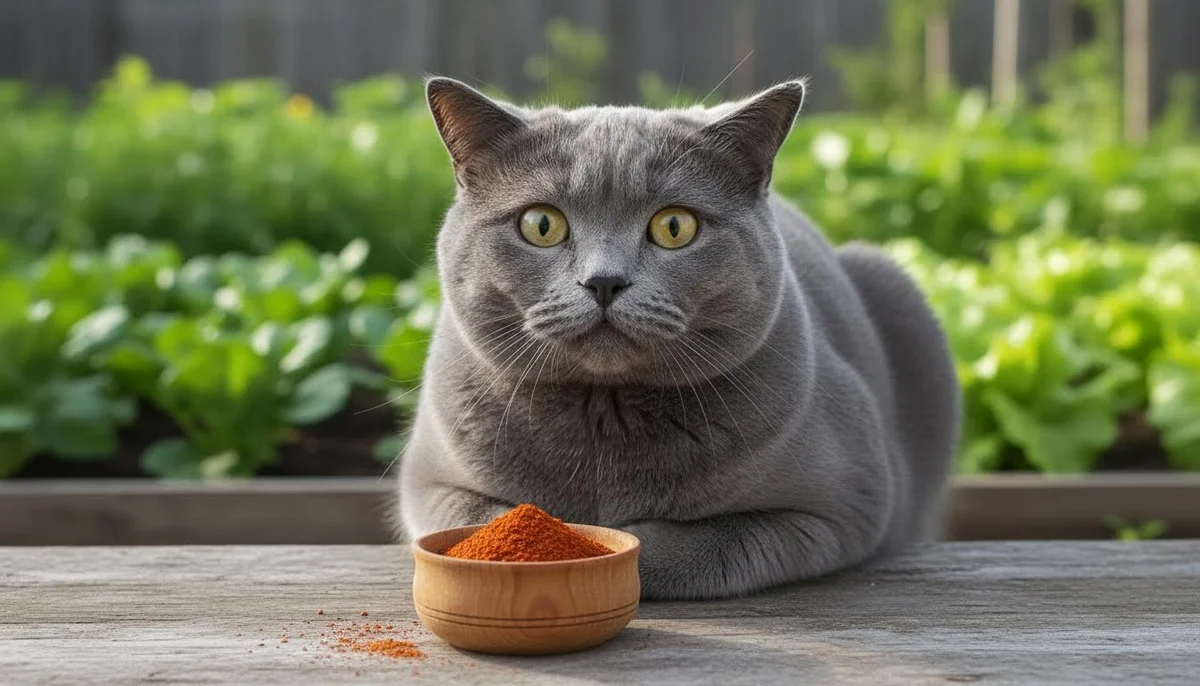
If your veggie beds keep turning into the neighborhood litter box, you have options that do not involve harsh chemicals. Cats hate a handful of sharp smells we barely notice — think dry mustard, citrus peels, certain essential oils, even plain vinegar — and they tend to give treated spots a wide berth. The nice part: these scents play well with your soil, your plants, and your pets.
The mustard barrier
Dry mustard powder is the quiet MVP here. What registers as a faint whiff to us hits a cat like a wall. The fine particles can also cause a mild, harmless irritation, which helps cement a negative association with that patch of ground. This works especially well around delicate seedlings that really cannot handle a curious paw.
How to use it: evenly sprinkle dry mustard over your beds, greenhouse rows, or flower borders, focusing on the spots cats favor for their 'marks.' Plan on about 1–2 tablespoons per standard bed. Stick with powder, not paste — paste washes off fast and can even draw insects, while the dry spice hangs on and keeps working after a light rain. If wind is a thing, blend the powder lightly into the top layer of soil or sand. After a heavy rain, refresh the layer.
Other kitchen-cupboard repellents
- Citrus peels: Scatter fresh or dried orange and lemon peels across beds and borders. That sharp citrus hit is a major feline turnoff.
- Spices: Ground cinnamon, black pepper, or red pepper deliver the kind of scent line cats prefer to avoid. Dust problem spots as needed.
- Coffee grounds: Used grounds bring a bitter aroma cats dislike and double as a soil-friendly amendment that improves structure.
- Essential oils and vinegar: Strong, natural smells in these families also register as unpleasant to cats. A little goes a long way.
Why garden beds call to cats
It is not just the smell. Freshly turned, soft, crumbly soil feels like a five-star litter box under a paw. That irresistible texture is half the battle, so changing the surface makes your scent strategy far more effective.
Make the ground less appealing
Firm the top layer of soil slightly around plants, or lay down mulch — bark, wood chips, or even cut grass — to take away that 'perfect digging' feel. For extra discouragement, create a surface that feels awkward underfoot: prickly raspberry or gooseberry twigs, pine cones, or a layer of large pebbles all do the job without hurting anything. Physical barriers help too. A simple plastic or metal mesh across the soil stops digging and protects roots and stems while plants settle in.
Put it all together
Blend approaches for best results. Start with a mustard powder treatment or ring beds with citrus peels, then shore things up with texture tweaks — mulch where you can, add a few prickly branches where cats like to test boundaries, and drop in a mesh barrier if they get persistent. Top up the mustard after a drenching rain, and that 'open for business' sign in your garden quietly disappears.